


Most Unique Beaches in Spain: Bizarre, Extraordinary, and Unlike Anything Else
- Jul 14
- 7 min read
Updated: Aug 15
Spain has thousands of beaches. Most of them are beautiful. Some of them are extraordinary. And a handful of them are so genuinely bizarre, so geologically improbable, or so visually unlike anything else on the Mediterranean or the Atlantic that they deserve a category entirely of their own.
Featured in our Month by Month series: June
This is not a list of the most popular beaches in Spain, or even the most beautiful. This is a list of the ones that make you stop and question what you are looking at. The ones that required a specific geological event, an underground tunnel system, a volcanic eruption, or sixty million years of erosion to exist. The ones that exist nowhere else on earth.
Playa de Gulpiyuri, Asturias — The Beach in the Middle of a Meadow
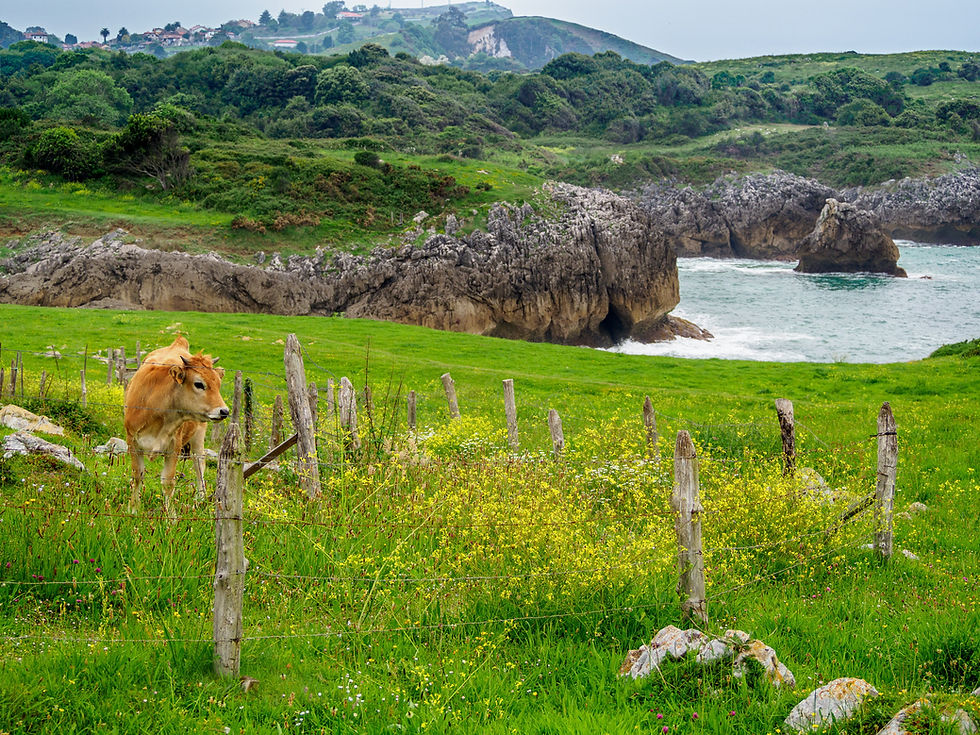
Playa de Gulpiyuri is probably the strangest beach in Europe and one of the strangest in the world. It is a small sandy beach in the middle of a meadow, over 100 meters from the sea, with no visible connection to the ocean. Waves arrive. The water is salty. The tide comes in and goes out.
The explanation is underground. The Cantabrian Sea carved tunnel systems through the limestone beneath the meadow, and Atlantic water flows through those tunnels to fill the hollow above. The result is a beach that sits in a field, surrounded by green grass, with waves arriving from nowhere. It is genuinely surreal and genuinely small — this is not a beach for a full day. It is a beach for standing at the edge of and reconsidering what you thought you knew about how geography works. Located near Llanes in Asturias, it is a short walk from the road with no amenities. Go at high tide when the waves are most dramatic.
Sakoneta, Basque Country — The Barcode Beach

The beach at Sakoneta near Zumaia is known as the barcode beach because of what the rock formations look like. Sixty million years of geological history are visible in perfectly vertical layers of flysch, alternating bands of dark and light rock stacked like the pages of a stone book and slanting at dramatic angles into the sea. The result is a coastline that looks like it was designed by a computer and executed by geological forces over an incomprehensible timescale.
Geologists travel specifically to this stretch of Basque coastline, which is part of the Zumaia UNESCO Geopark, to study one of the most important geological records accessible anywhere on earth. The powerful Atlantic swell also makes it a serious surf beach. Game of Thrones filmed here. The combination of scientific significance, visual drama, and pop culture recognition is unusual in a single location. Accessible on foot from Zumaia and reachable as a day trip from Bilbao or San Sebastián.
Playa de las Catedrales, Galicia — Natural Cathedrals at Low Tide

The name translates as the Beach of the Cathedrals, and it earns it. The Atlantic has carved the coastal rock into a series of arches, buttresses, and tunnels that rise up to 30 meters high and look exactly like the nave of a Gothic cathedral. At low tide the full structure is revealed and you can walk beneath them. At high tide the sea reclaims most of it.
The timing of your visit is critical. Check the tide tables before you go and arrive within two hours of low tide. Access during peak season requires a free permit booked in advance to manage visitor numbers. The beach is near Ribadeo in Lugo province, Galicia, approximately two hours from Santiago de Compostela.
Playa de los Muertos, Almería — Black Cliffs and Remote Solitude

Playa de los Muertos, the Beach of the Dead, sits at the bottom of dramatic dark mineral cliffs in the Cabo de Gata natural park in Almería. It is reachable only on foot, about 40 minutes from the nearest parking area, which is exactly why it remains one of the most pristine and extraordinary beaches in Spain. The dark geological formations contrasting with the turquoise water and white shingle creates a visual combination found almost nowhere else on the Mediterranean.
The Cabo de Gata coast is part of Europe's only true hot desert landscape, which gives it an atmosphere entirely unlike the green northern coast or the developed resort beaches of the south. The water here is exceptionally clear due to the absence of rivers bringing sediment into the sea. Bring everything you need, there is nothing at the beach itself.
Playa del Silencio, Asturias — The Beach That Takes Effort

The Playa del Silencio, the Beach of Silence, is enclosed by dramatic rock walls on three sides and accessible only via a steep path that keeps casual visitors away. The result is a beach that despite its reputation remains relatively uncrowded and retains a quality of solitude that is increasingly rare anywhere on the Spanish coast.
The rock formations framing the beach are spectacular, the water is the cold clear Atlantic, and the absence of any infrastructure means the experience is the landscape and nothing else. Located between Cudillero and Luarca in western Asturias. Go early morning in summer or any time in the shoulder season.
Playa de Cofete, Fuerteventura — Wild Atlantic at the End of the Road

Cofete is at the end of a rough mountain road on the southern tip of Fuerteventura, backed by the jagged peaks of the Jandía mountains, and it looks nothing like the resort beaches that most people associate with this island. The beach is wild, windswept, and enormous, stretching for kilometers with the Atlantic hammering in from the open ocean. Swimming is not always safe due to strong currents, but the landscape is extraordinary.
The drive to get there is itself part of the experience, a rough track through volcanic mountain terrain with views over both coasts of the peninsula. The contrast between Cofete and the tourist beaches of northern Fuerteventura is so extreme that they are essentially different destinations.
The Volcanic Calas of Murcia — Black Rock and Extraordinary Color

The coastline south of Cartagena in Murcia has volcanic geology that produces calas unlike anything on the Costa Blanca or the Costa Brava. The black volcanic rock creates water colors that are deeper and more intense than standard Mediterranean turquoise, and the dramatic contrast between the dark rock and the clear water is something you have to see to understand. Cala del Barco near Águilas is one of the most striking examples.
These calas are relatively unknown outside of Spain itself and see a fraction of the visitors that the more famous coastal areas attract. The volcanic origin of the coastline also produces unusual rock formations, sea caves, and cliff faces with colors ranging from near-black to deep red depending on the mineral composition. They reward the traveler who goes looking.
Ses Illetes, Formentera — Water That Doesn't Look Real

Formentera is the smallest of the Balearic Islands and Ses Illetes is its defining beach. The water color here is a shade of turquoise blue-green so extreme that photographs of it routinely get accused of being edited. They are not edited. The combination of white sand, shallow depth, and the particular mineral composition of the seabed creates a color that has more in common with the Caribbean than with the Mediterranean.
The beach is reachable only by ferry from Ibiza, which keeps the numbers manageable. The island has no airport and minimal development. The further you walk from the ferry terminal the quieter and more extraordinary it becomes. Formentera in general, and Ses Illetes in particular, consistently rank among the finest beach experiences in Europe for people who prioritize water quality over everything else.
Cala Varques, Mallorca — The Beach With an Underground Lake

Cala Varques is a beautiful cove on the east coast of Mallorca accessible only on foot through private farmland, which has kept it off the mass tourism circuit. What makes it genuinely extraordinary is not the beach itself but what lies beyond it: a sea cave accessible by swimming through a narrow entrance in the rock face, which opens into an interior with an underground lake, complete darkness, and bioluminescent organisms in the water that glow when disturbed.
The combination of a beautiful open cove and a hidden cave system behind it is unusual anywhere. The experience of swimming through the entrance into the cave and floating in the darkness is the kind of thing that is not reproducible anywhere else in the Balearics. Go with a waterproof light and be a confident swimmer.
Playa del Popcorn, Fuerteventura — The Beach That Looks Like a Snack

Near El Cotillo in northern Fuerteventura, a stretch of beach is covered in small white rounded balls that look exactly like popcorn scattered across the sand. They are not popcorn. They are rhodoliths, small balls of coralline algae formed by rolling back and forth in the waves over years until they become perfectly rounded. The result is a beach surface that creates genuine double-takes and photographs that require explanation.
The rhodoliths are a protected natural formation and should not be removed or disturbed. The beach functions as a normal beach otherwise, with clear Atlantic water and the dramatic volcanic landscape that characterizes this part of Fuerteventura. It is a short drive from El Cotillo and easy to combine with the nearby lagoon beaches.
When to Visit and How to Approach These Beaches
Several of these beaches require planning that a standard beach visit does not. Playa de las Catedrales needs tide timing and a permit in summer. Playa de Gulpiyuri is at its best at high tide. Cala Varques requires a confident swim. Cofete requires a car and the willingness to drive a rough road. Playa de los Muertos requires a 40-minute walk each way in Almería heat.
In every case, the effort is the point. These beaches exist in their extraordinary state precisely because they are not easy. The ones that are easy to reach are the ones that have been discovered, developed, and crowded. The ones on this list reward the traveler who plans ahead and shows up prepared.
Written by Sherri: an American who spent years traveling solo, including time living in Peru, before settling into a full-time digital nomad life with her husband and young kids for over four years. She's now been in Europe for 3.5 years, most of it in the Valencia area of Spain. Everything on Travel-Casa is written from firsthand experience or knowledge picked up along the way.
Spain Has Many Versions. Find Yours.
Spain is not one destination, it's seventeen. Here's the full regional picture, grouped roughly by geography:
Comments